
Melamine Laminate PCB Backup Board
Commercial product page for specifications, qualification, samples and RFQ. Final purchasing limits should follow the current TDS and your line-test result.
Commercial specification starting point
These values are presented as current/published website starting data. Treat the current TDS for the quoted lot/grade as the controlling technical document.
| Core | High-density fiberboard |
| Surface | Hot-pressed melamine impregnated paper |
| Published hardness | 80±3 HD |
| Published density | Approx. 980–1000 kg/m³ class |
| Thickness | 2.0 / 2.5 / 2.7 mm |
| Published flatness | ≤0.10 mm |
| Typical role | FPC, rigid-flex, HDI and multilayer qualification |
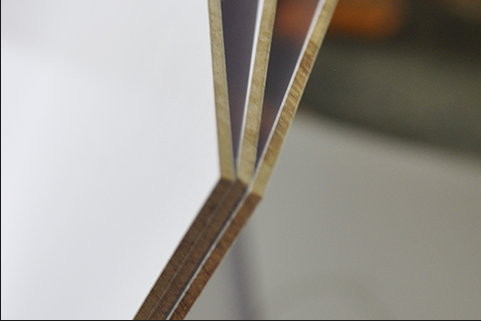
Where this backup board fits
FPC / rigid-flex
Useful to test when a hard fused surface with an HDF core matches the line better than a very rigid phenolic landing.
Multilayer burr control
A harder face can be considered when standard HDF no longer gives the desired exit support.
Existing melamine users
A direct qualification path when the current line is already standardized around a melamine-laminate type.
- Confusing it with UV melamine: The surface process is different; do not merge the two specifications or product names.
- Uncontrolled humidity: Confirm storage and sheet flatness after real transit/storage, not only at factory release.
- Price-only substitution: Compare yield and drill consumption before choosing the cheaper sheet.
What buyers should measure — not just what the datasheet says
Exit support
Measure bottom-side burr/tear-out and hole quality on the actual panel stack.
Tool interaction
Track bit wear, breakage, hit count and any change in resharpening frequency.
Stack stability
Check flatness, vacuum behavior, compression and any hole-location or depth instability.
Hole-wall cleanliness
Inspect smear, debris transfer and downstream desmear/plating burden.
Moisture behavior
Evaluate after real storage and transit, especially for fibre-based materials.
Total cost
Convert sheet cost, drill consumption, scrap and downtime into cost per good panel or good hole.
White vs clear surface: treat color as an inspection aid, not proof of quality
Buyers sometimes describe clear/transparent coatings as a “blind varnish” because low contrast can make some pits, fibres or surface marks harder to see. That is a useful QC question — but coating color by itself does not prove whether a board is good or bad.
Define the defect first
Specify pinholes, pits, fibre exposure, scratches, coating voids and allowed defect size rather than writing only “white surface required.”
Define the inspection method
Lighting, viewing distance, camera/vision settings and sampling frequency determine whether a surface defect is actually detectable.
Then correlate to drilling
Only treat a visible pit or coating defect as critical if line testing shows a relationship with burr, breakage, residue or hole quality.
White pigmented vs transparent coating: the low-price QC trade-off
Some buyers call a low-cost clear finish “blind varnish” because the dark fibre background can make small pits, pinholes, contamination or surface irregularity harder to spot. A white pigmented surface can improve contrast for visual inspection, but coating color is only one QC tool.
Clear / transparent varnish
Lower coating cost can be attractive, but qualify whether operators can reliably see the defects that matter under production lighting.
White pigmented surface
Higher contrast can make surface defects easier to flag before the sheet reaches the drill line. Confirm with a controlled inspection sample rather than marketing photos.
What actually decides the purchase
Surface flatness, pinhole/pit sorting, drilling burr, tool wear, cleanliness and accepted-panel yield. A visible white surface is useful only if those production KPIs improve.
Compare with other YUESHAN backup-board families
| Alternative | When to consider it | Page |
|---|---|---|
| HDF | Standard multilayer and cost-first qualification | HDF PCB Backup Board → |
| Melamine laminate | Hard fused surface with HDF core; FPC / rigid-flex / multilayer | Melamine Backup Board → |
| UV Melamine | Sealed surface where humidity, smear or HDI tolerance matters | UV Melamine → |
| Phenolic PHE | Specialty high-hardness support for selected precision work | Phenolic PHE → |
Buyer qualification checklist
Send with the RFQ
- Current backup-board type and specification
- PCB thickness, layer count and laminate family
- Smallest mechanical drill diameter and hit count
- Panels per stack and target throughput
- Current exit burr / breakage / smear / warpage problem
- Sheet size, thickness, volume and destination
Measure in the side-by-side
- Exit burr / tear-out
- Hole position and wall cleanliness
- Bit wear and breakage
- Flatness / stack stability
- First-pass yield and scrap
- Cost per good drilled panel
Selection help: How to Choose the Right PCB Backup Board · Troubleshooting: PCB Drilling Exit Burr Control
Drill-room troubleshooting library
Use these problem-led pages to move from shop-floor complaints to controlled qualification tests.
Drill Bit Breakage
Snatching, grabbing, breakthrough snap and tool-life diagnosis.
UV Warpage After Cutting
Banana board, cupping, bowing, moisture and cure/conditioning checks.
The $1/Sheet Trap
Compare cost per good panel instead of board price alone.
PF vs UF Resin
Glue recipe, thermal claims, moisture and supplier verification.
Resin Gunk & Drill Wrap
Sticky residue, tool heat, resin wrap and one-variable testing.
Exit Burr Control
Bottom blowout, copper pull and backup-support troubleshooting.
Melamine Laminate PCB Backup Board FAQ
Is melamine laminate the same as UV melamine?
No. Melamine laminate uses melamine-impregnated paper fused to the HDF core under heat and pressure; UV melamine uses a UV-cured surface system. Treat them as separate product families.
What are the current published melamine specifications?
Indexed YUESHAN product data lists 80±3 HD hardness, about 980–1000 kg/m³ density class, 2.0/2.5/2.7 mm thickness and ≤0.10 mm flatness. Confirm current TDS values before approval.
What applications should test melamine laminate?
It is positioned for FPC, rigid-flex, HDI and multilayer drilling where a hard surface with an HDF core is useful.
How should I compare it with HDF?
Hold drilling conditions constant and compare exit burr, hole-wall cleanliness, tool wear, flatness and first-pass yield.
How should I compare it with phenolic?
Phenolic is a much more rigid specialty laminate. Use the material that meets the exit-quality target with acceptable drill wear and total cost.
Can I request custom sizes?
Industrial sheet sizes and custom cutting can be discussed against quantity and tolerance. Confirm the cut-size tolerance and packing in the quotation.
Is a white melamine surface always better than a clear coating?
Not automatically. A white surface may improve visual contrast for some defects, but coating chemistry, surface integrity, flatness and drilling results matter more. Define the inspection method and acceptance criteria instead of approving by color alone.
What does “bottom blowout” mean when buyers discuss a melamine backup board?
It is informal shop-floor language for severe exit-side tear-out or burr as the drill breaks through the bottom of the PCB stack. Diagnose tool condition, feed, stack support and backup-board surface together.
Why do some buyers prefer a white pigmented surface to transparent varnish?
A white surface can provide better visual contrast for pits, pinholes, contamination and fibre variation during incoming inspection. It is an inspection aid, not proof that the board will drill better, so it should be correlated with actual drilling results.
Request a qualification sample
Send the current material and the drilling KPI you need to improve. YUESHAN can then discuss the relevant grade, technical document and sample rather than quoting a generic “best” board.